

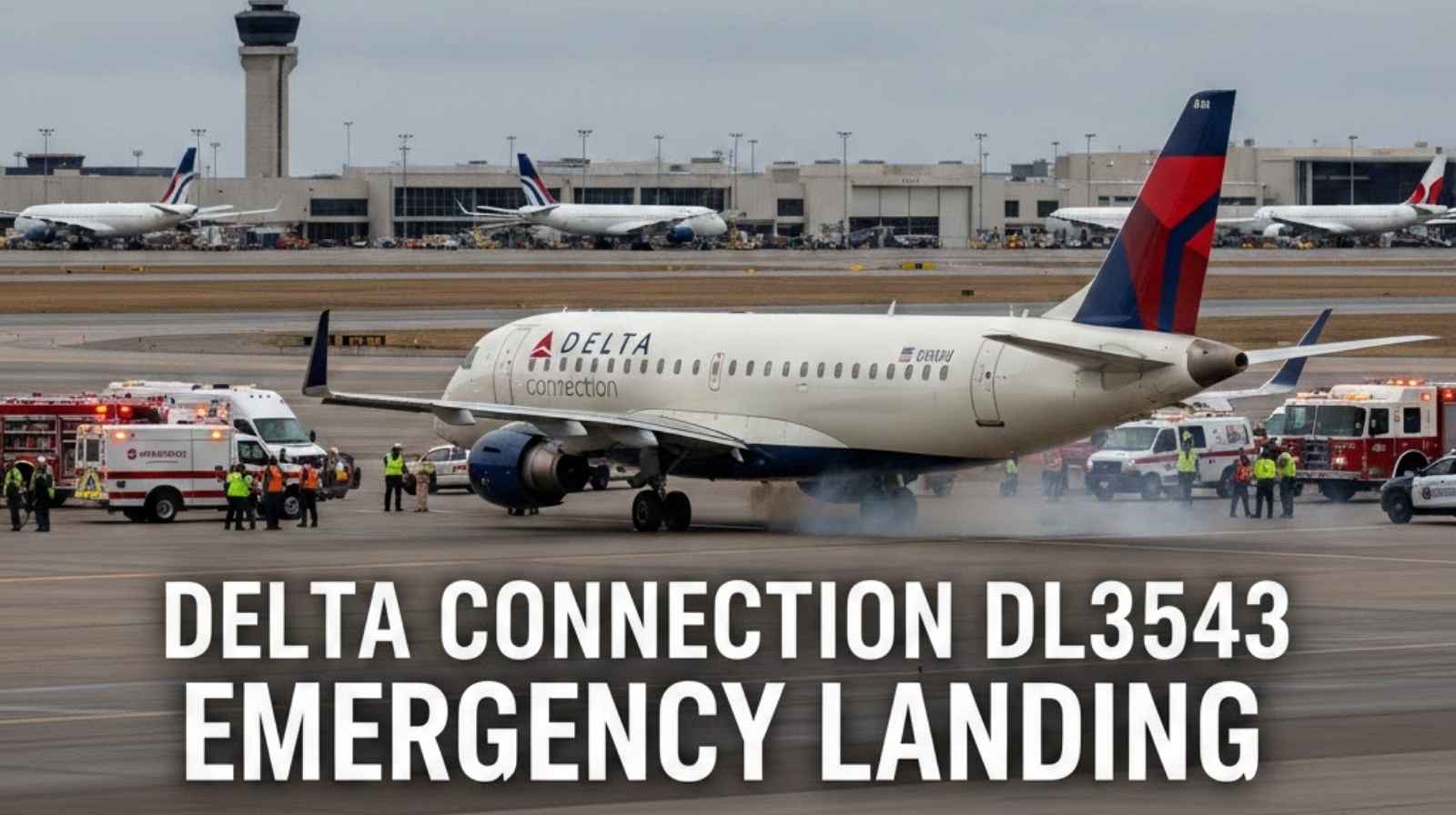
Delta Connection DL3543 Emergency Landing made headlines after returning to its departure airport due to a pressurization system indication. The aircraft, an Embraer E175 operated by Endeavor Air, safely performed a precautionary return to Chicago Midway (MDW), where emergency vehicles were positioned as a standard safety measure.
No injuries were reported, and passengers were rebooked the same day. This article provides a full timeline, explains what triggered the emergency return, details how the crew responded, and breaks down what this aviation incident means for travelers. We also cover practical passenger tips and clarify concerns about commercial aviation safety in 2026.
What Was Delta Connection DL3543?
Delta Connection DL3543 was a regional flight operated by Endeavor Air, a wholly owned subsidiary of Delta Air Lines. Delta Connection flights are regional services that operate under the Delta brand but are flown by partner carriers using smaller aircraft designed for short-haul service.
Aircraft and Operational Details
The aircraft involved was an Embraer E175, registration N259SY, a popular regional jet used extensively across North America. The E175 typically seats between 70 and 76 passengers and is widely recognized for its reliability and comfort on regional routes.
Flight details included:
- Date: July 7, 2025
- Departure airport: Chicago Midway (MDW)
- Intended destination: Minneapolis-St. Paul International Airport (MSP)
- Operator: Endeavor Air (Delta Connection)
- Aircraft registration: N259SY
- Passenger load: Moderate, typical for a regional flight
- Gate on return: Gate C12
This was a short-haul regional flight scheduled between Chicago Midway and Minneapolis-St. Paul International Airport, one of Delta’s major hubs.
Shortly after departure from Chicago Midway (MDW), the flight crew received a pressurization system indication. Following standard emergency procedures, they declared a precautionary return and coordinated with air traffic control.
Full Timeline: Minute-by-Minute Breakdown of July 7, 2025
Understanding the timeline helps clarify how effectively aviation safety systems worked.
Pre-Departure and Takeoff
- Morning departure from Chicago Midway (MDW)
- Aircraft inspected as part of routine checks
- Smooth taxi and departure
The flight lifted off on schedule. Initial climb-out appeared normal, according to flight tracking data.
Pressurization System Indication
Within minutes of reaching cruising altitude, the crew received a sensor alert linked to the cabin pressurization system. Cabin pressurization regulates air pressure inside the aircraft to keep passengers comfortable and safe at high altitude.
The system indicated an abnormal reading. Although cabin pressure remained stable initially, protocol required action.
Emergency Procedures Initiated
At this stage:
- The pilots notified air traffic control.
- They declared an emergency and squawked 7700 — the international transponder code signaling a general emergency.
- A controlled descent began.
- Oxygen masks were placed on standby but were not required for passenger deployment.
Air traffic control cleared the aircraft for a return approach to MDW. Emergency vehicles were positioned near Runway 12R as a precaution.
Landing and Taxi
The aircraft made a safe landing on Runway 12R. Fire and rescue teams visually inspected the jet as it taxied.
The plane proceeded to Gate C12 without further incident.
- No injuries reported
- Cabin remained calm
- Emergency return classified as precautionary
Total flight duration was significantly shortened due to the return.
What Triggered the Emergency?
The emergency was triggered by a pressurization system indication, specifically a sensor alert affecting the cabin pressurization monitoring system.
Understanding Cabin Pressurization
Cabin pressurization allows aircraft to fly at high altitudes where outside air is too thin for breathing. Modern commercial jets like the Embraer E175 have multiple redundant safety systems to monitor:
- Airflow
- Pressure levels
- Outflow valves
- Automatic and manual control modes
In this case, early aircraft inspection findings suggested an abnormal sensor reading rather than an actual structural or system failure.
Common Causes of Pressurization Alerts
Pressurization issues can stem from:
- Faulty sensors
- Valve malfunctions
- Software glitches
- Minor seal leaks
Modern aviation safety systems are designed to alert crews early — even if the anomaly is minor. That early warning likely prevented escalation.
Importantly:
- Oxygen masks were not deployed
- Cabin pressure remained within safe range
- No decompression occurred
Maintenance teams conducted a full aircraft inspection after landing, focusing on the pressurization control module and sensor systems.
How Delta and the Crew Nailed the Response
The professional handling of the incident demonstrates the strength of commercial aviation safety systems in 2026.
Pilot Training and Emergency Protocol
Pilots operating regional flights undergo rigorous training, including simulator sessions covering:
- Rapid depressurization
- Emergency descent
- Flight diversion procedures
- ATC coordination
Declaring squawk 7700 ensured priority handling from air traffic control. This allowed a streamlined vector back to MDW.
Cabin Crew Role
Flight attendants immediately:
- Secured the cabin
- Briefed passengers
- Monitored seatbelts
- Prepared for potential emergency landing
The cabin remained calm because communication was clear and controlled.
Delta’s Operational Response
After landing:
- Emergency vehicles stood down once inspection confirmed stability
- Maintenance teams inspected the aircraft
- Customer service arranged rebooking options
- Some passengers were transferred to Delta mainline service
This coordinated approach shows how airlines manage aviation incidents while prioritizing passenger safety.
What Passengers Experienced
From a traveler’s perspective, the experience was understandably stressful but professionally managed.
Inside the Cabin
Passengers reported:
- A noticeable descent
- Increased engine sound
- Calm but serious announcements
Oxygen masks did not deploy. The cabin remained calm throughout.
The crew explained the precautionary return clearly, emphasizing safety.
After Landing
Once parked at Gate C12:
- Passengers disembarked normally
- No medical treatment required
- Rebooking options offered immediately
Customer service teams worked to minimize travel disruption, including same-day rebooking to Minneapolis-St. Paul.
Because there were no injuries and no visible aircraft damage, the aviation incident was classified as operationally minor but safety-driven.
What This Means for Travelers: Lessons and Reassurance
Incidents like this highlight how commercial aviation safety works — not how it fails.
Aviation Safety Layers at Work
Modern aviation operates on multiple safety layers:
| Safety Layer | Role in DL3543 Incident |
| Sensor systems | Detected anomaly early |
| Pilot training | Ensured fast, correct response |
| Air traffic control | Provided immediate priority routing |
| Emergency vehicles | Positioned as precaution |
| Maintenance teams | Conducted post-flight inspection |
Each system performed as designed.
Regional Flights vs. Delta Mainline
Some travelers question whether regional jets are less safe than mainline aircraft. Data consistently shows:
- Regional flight safety records align closely with mainline carriers.
- Aircraft like the Embraer E175 have strong safety histories.
- Operators like Endeavor Air follow the same FAA safety standards as Delta.
There is no evidence that this event indicates systemic risk.
Practical Tips for Travelers
If you ever experience a similar aviation incident, follow these steps to remain safe and informed:
- Stay seated with seatbelt fastened during unexpected descents.
- Listen carefully to crew instructions — they are trained for this.
- Avoid speculation until official updates are given.
- Use airline rebooking tools quickly after landing.
- Know your rights under airline customer service policies.
Helpful reminders:
- Emergency procedures are precautionary in most cases.
- Declaring an emergency doesn’t automatically mean danger.
- Most flight diversions result in safe landings without injury.
Prepared passengers experience less stress during unexpected events.
Conclusion
The Delta Connection DL3543 emergency landing on July 7, 2025, serves as a strong example of aviation safety systems functioning exactly as designed. A pressurization system indication triggered a precautionary return to Chicago Midway. The crew declared squawk 7700, coordinated with air traffic control, and executed a safe landing on Runway 12R.
There were no injuries. The cabin remained calm. The aircraft underwent inspection, and passengers were rebooked quickly.
Rather than signaling danger, this aviation incident reinforces how layered safety systems, pilot training, and emergency protocols protect passengers every day in commercial aviation.
FAQs
Was anyone hurt on DL3543?
No. There were no injuries reported among passengers or crew.
What exactly caused the pressurization issue?
Preliminary findings point to a pressurization system indication, likely tied to a sensor alert rather than a full system failure. Cabin pressure remained stable.
Does this mean Delta regional flights are unsafe?
No. Regional flights operated by Endeavor Air follow the same FAA safety standards as Delta mainline operations. The safe landing demonstrates effective safety systems.
Will this affect my upcoming Delta flight?
There is no evidence of broader operational risk. Aircraft inspection procedures ensure planes meet strict maintenance standards before returning to service.
What should I do if something similar happens on my flight?
Remain seated, listen to the crew, and follow emergency procedures. Most precautionary returns end safely with minimal disruption.

Lennox Vail is your go-to guide for everything celebrity and pop culture. Based in New York, he uncovers the stories behind the stars, mixing exclusive scoops with expert commentary. With an irresistible style and a pulse on what’s trending, Lennox makes sure readers never miss a beat in the entertainment world.